

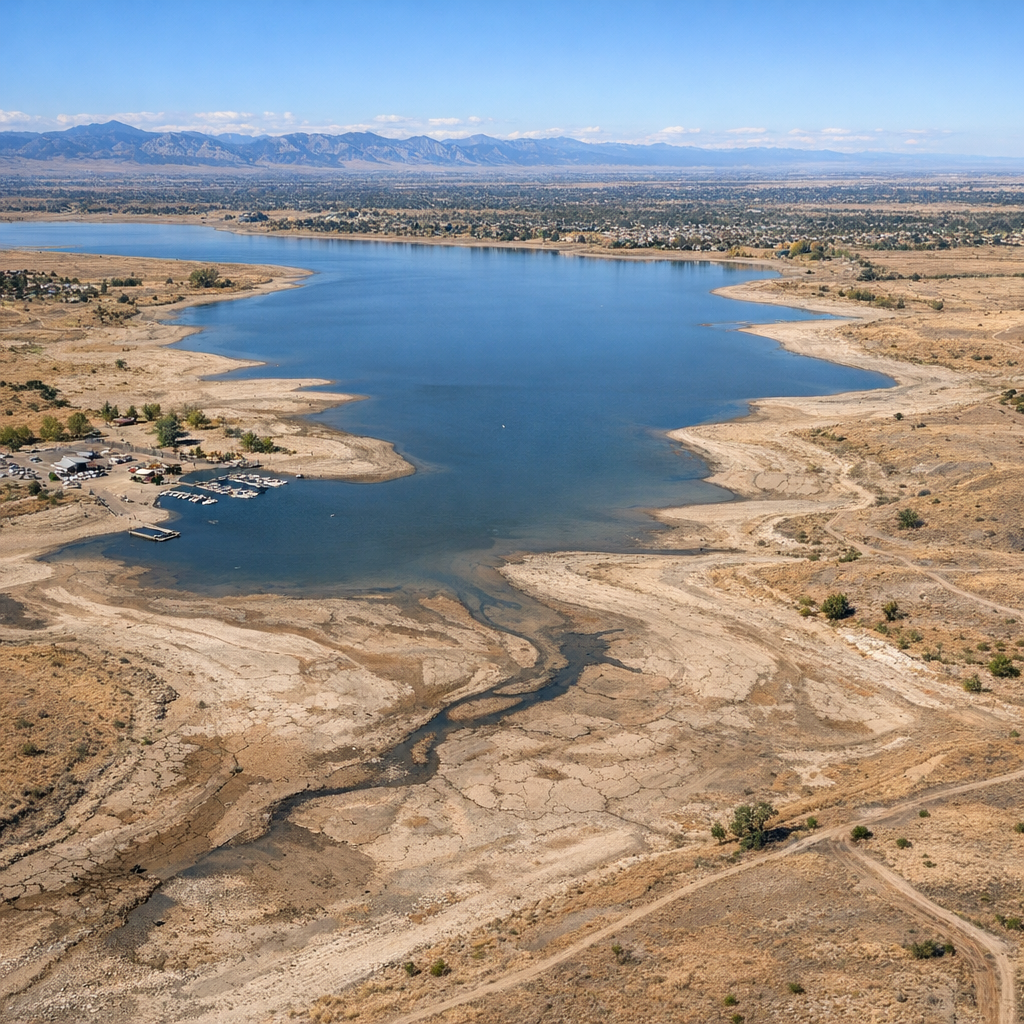
Water scarcity is a pressing global issue, with regions worldwide facing challenges due to climate change, population growth, and overconsumption. These global trends have local implications, including here in Westminster, Colorado.
Understanding Global Water Scarcity
Globally, water scarcity arises from factors such as prolonged droughts, diminishing freshwater sources, and increasing demand from growing populations. Climate change exacerbates these issues by altering precipitation patterns and increasing the frequency of extreme weather events.
Westminster’s Water Challenges
Westminster has experienced its share of water-related challenges. The city relies on Standley Lake, which can store up to 14 billion gallons of water from the Clear Creek watershed. However, snowpack in the Clear Creek Basin has dropped to levels last seen in 2002, the driest year on record. As a result, the city enacted a “Drought Watch” on April 15. While no mandatory restrictions are in place yet, the city has issued guidelines for lawn watering.
Proactive Measures by Westminster
In response to these challenges, Westminster has taken several proactive steps:
- Infrastructure Investment: The city broke ground on a new $206 million drinking water plant at 9988 Westminster Blvd. The facility is expected to treat 14.7 million gallons per day and be completed by 2028. Once online, it will allow Westminster to eventually phase out the Semper facility and operate with its own dedicated treatment plant.
- Community Engagement: Westminster launched the Water Affordability to Every Resident Task Force, which held its first meeting on April 6. The group, made up of residents selected through an application process, will help shape decisions on water rates and long-term infrastructure needs.
Looking Ahead
While global water scarcity presents significant challenges, Westminster’s proactive measures demonstrate a commitment to ensuring a sustainable water future for its residents. By investing in infrastructure and engaging the community, the city aims to navigate the complexities of water management in an era of global change.